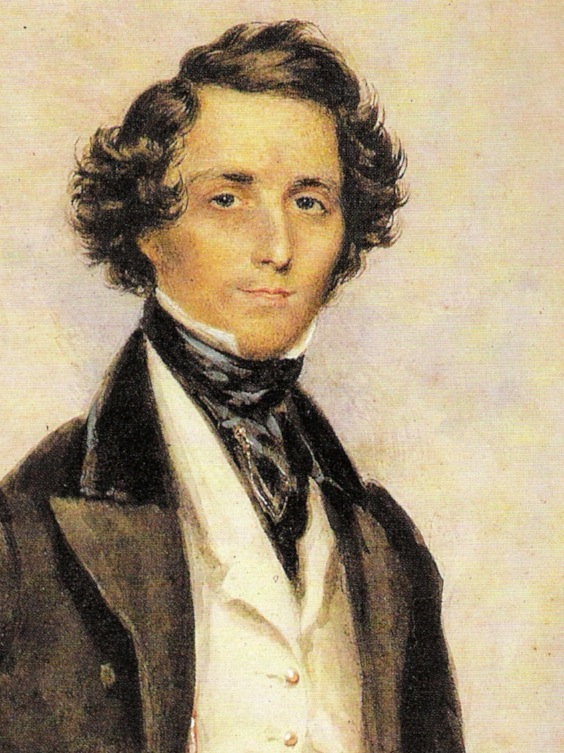
Felix Mendelssohn · Romanticism
1809 – 1847
1846 · Oratory · Birmingham Festival
Tonality
Without a unique tone. Like all oratoriums, he goes through many tonalities along his aryan, chorus and recitation.
From the atril
Great admirer of Bach and Handel, Mendelssohn wanted to continue the tradition of prayer with this work on the prophet Elias, which he premiered at the Birmingham Festival in 1846, in English, with a triumphant success. It was his last great work: he died the following year. In England it became an oratory as dear as The Messiah.
I can INTEREST you.

Since the choir, it's a very dramatic, almost operatic work. The scene of the challenge to the priests of Baal is spectacular: the chorus invokes his God with more and more despair, and nothing happens, until Elijah invokes the true God and the fire falls from heaven. The aria of Elijah It's ist genuine. (Enough already), with a cello that accompanies it, is of deep sadness. And there's a threesome of angels for unaccompanied female voices, Hebe deine Augen aufof a heavenly purity. Singing it in a great choir is unforgettable.
What to hear
- The scene of the priests of Baal.
- The aria It's ist genuine..
- The trio of unaccompanied angels.

