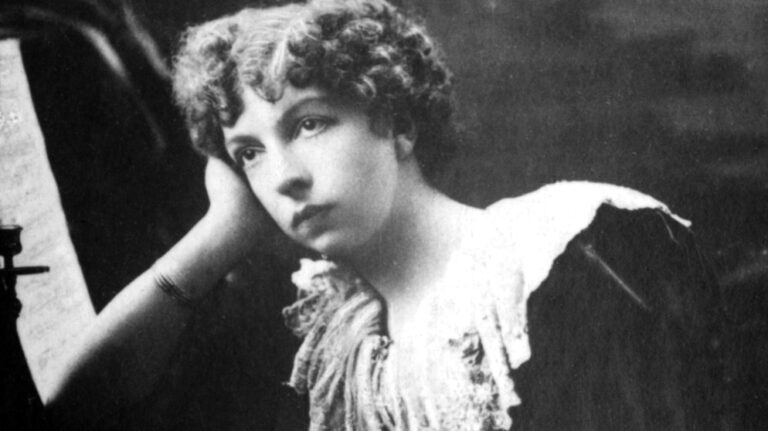
Cécile Chaminade · Romanticism
1857 – 1944
1888 · Symphony ballet · Marseille
Tonality
It works in several numbers, without a unique tone.
Instruments
- Wood and metals
- Percussion
- Row
From the atril
In Paris in the 1980s it was very difficult to get a ballet to be set up, and even more so for a woman. Chaminade solved the problem by going to Marseilles: Callirhoë premiered at the Grand-Théâtre on March 16, 1888 and had a huge success, with more than two hundred functions in the same theatre. The critic saw in it a worthy successor of Delibes, and the work was reassembled in Lyon, Bordeaux and Cannes.
The argument is in ancient Greece and revolves around the nymphal Callirhoë, but what it conquers is music: dances of colorful orchestration, melodies that remember the first attempt and a very French sense of elegance. From the score came several numbers that circulated on their own, especially the Pas des écharpes, the dance of the handkerchiefs, which in their piano version became one of the most sold pieces of their time in Europe and in the United States.
What to hear
- The Pas des écharpes, light and undulating.
- The colors of the woods in the dances.
- The relationship with Delibes' ballets.

