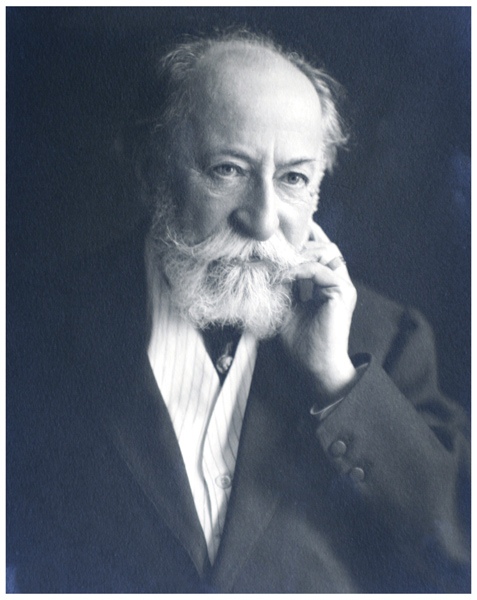
Camille Saint- Saëns · Romanticism
1835–1921
1874 · Symphonic poem · Paris
Tonality
Instruments
- Solo violin, with the most acute rope tuned half a tone lower.
- Orchestra with harp, xylophone and percussion.
From the atril
The Macabra dance was born in 1872 as a song about a poem by Henri Cazalis, and two years later Saint- Saëns turned it into a symphonic poem. It premiered in Paris in January 1875 at the Concerts Colonne. An old legend tells: at midnight, Death appears in the cemetery and, playing the violin, it makes the skeletons dance until the rooster's song returns them to their graves.
The harp gives the twelve bells, and the soloist violin, with a rope distuned on purpose, plays a rough interval that in the Middle Ages was called «the devil in music». The xylophone, then almost unknown in the orchestra, imitates the entrechocar of the bones, and the Gregorian singing of the Dies irae It's turned into waltz. Liszt admired her so much that she made a piano transcript.
What to hear
- The twelve bells of the harp and the tuning of the violin of death.
- The xylophone imitating the noise of the bones.
- The rooster's song on the oboe, which ends the dance.

