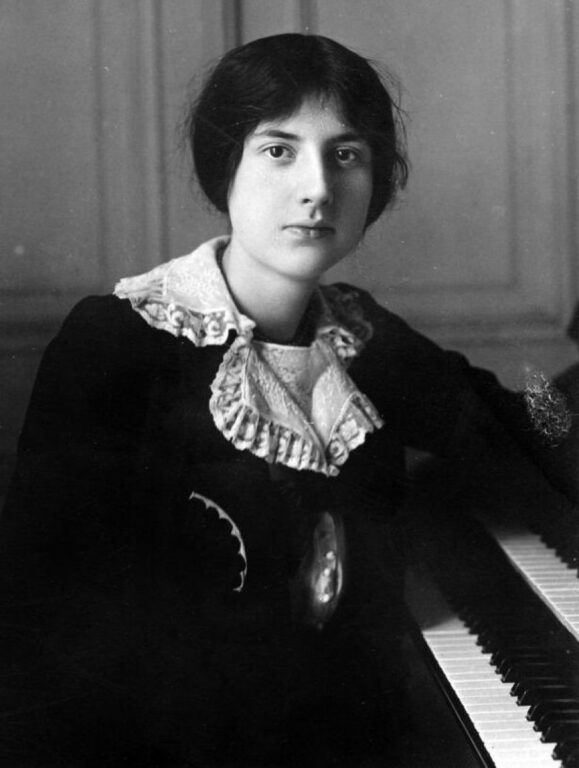
Lili Boulanger · Impressionism
1893 – 1918
1918 · Orchestra and trio with piano
Tonality
Without a unique tone. They are two sister pieces, one somber and one light, and each has his own.
From the atril
D'un soir sad («From a sad afternoon») and D'un matin de printemps («From a spring morning») are Lili Boulanger's last two instrumental works, completed shortly before his death. They form a couple of contrasts: they share thematic material, but one is dark and the other is bright. She herself prepared versions for orchestra and trio with piano.
D'un matin de printemps It is short, sparkling and full of life, with agile rhythms and an almost playful joy, like a last flash of light. D'un soir sad, much more extensive, is one of its deepest pages: a serious and obstinate lament, with dense harmonies, slow marches and heartbreaking climax, which many hear as a good-bye to life. Tapping them one after another is a strong experience for musicians: the same theme, transformed, passes from spring to twilight. For a piano trio, they are magnificent and still unprogrammed works.
What to hear
- The sparkling joy of D'un matin de printemps.
- The obstinate lament of D'un soir sad.
- The same theme transformed into the two pieces.

