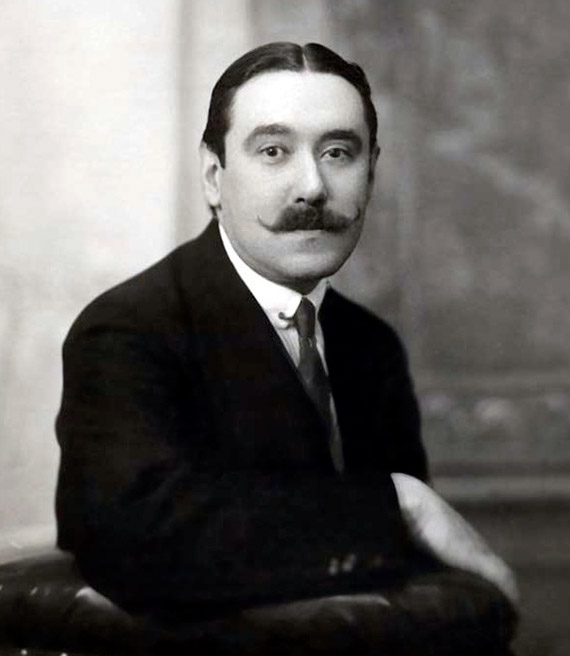
Joaquín Turina · Impressionism
1882 – 1949
1912 · Orchestra · Paris
Tonality
Without a unique tone. The poem advances through different tonalities according to the episodes of the party.
From the atril
The Rocío procession, op. 9, is the first great orchestral success of Turina. It was composed in Paris in 1912 and premiered in Madrid in 1913, with the Madrid Symphony Orchestra and Enrique Fernández Arbós. In about ten minutes he painted the exit of Triana's brotherhood to the Rocío's Romry.
The work has two parts that happen without pause. In «Triana at party» the orchestra is filled with rhythms of sevillanas, palms suggested by the percussion and melodies that pass from one instrument to another, as groups that dance on different corners of the neighborhood. Then he comes. «The procession»: a solemn theme in the wind, flute and tamboril that evoke the rosemary, bell, and at the culminating moment the quote of the Royal March, which sounds when the image passes. In the end, the party comes back and moves away little by little. For the orchestra it is a brilliant and very colorful score, in which you can see what Turina had learned from Debussy and Rimski-Korsakov.
What to hear
- The bustle of sevillanas of «Triana at party».
- The flute and the drummer of the rosemary.
- The entrance of the Royal March after the procession.

