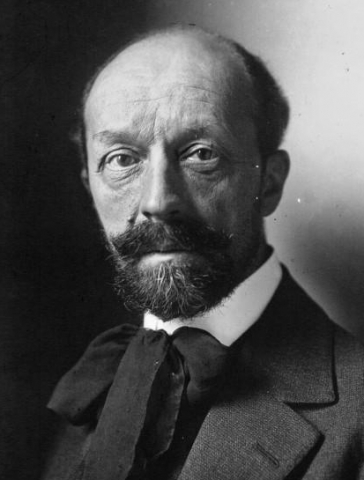
Albert Roussel · Impressionism
1869 – 1937
1911 · Solists, chorus and orchestra · Paris
Tonality
Without a unique tone. Its three parts go through several tonalities.
From the atril
In 1909, already retired from the Navy, Roussel made a long honeymoon trip with his wife in India and South-East Asia. From those memories the Evocations, three great symphonic pictures: The gods in the shadow of the cavesinspired by the temples excavated on the rock; The pink citywhich evokes Jaipur; and On the banks of the sacred river, a scene at the Ganges in Benarés, which ends with chorus and soloists.
It's not a postcard exotism. Roussel does not quote Indian music, but translates the sensations of the journey into a very refined orchestral language, close to Debussy but with a rhythmic strength that is already yours. For the orchestra it is a score of rich colors and changing textures, in which the woods have a leading role. The third picture, with the arrival of the choir at dawn over the river, has a very exciting luminous greatness.
What to hear
- The mysterious atmosphere of the temples in the first picture.
- The colors and festive rhythms of The pink city.
- The choir entrance in the third painting.

