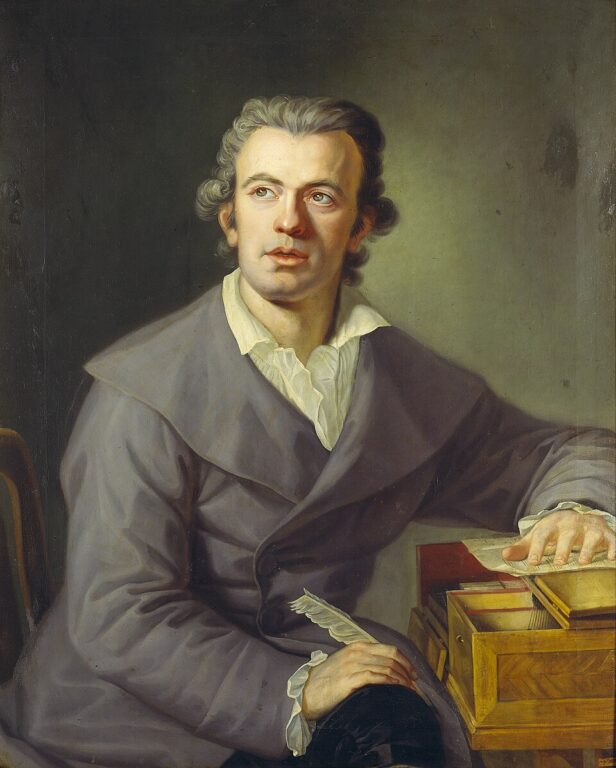
Johann Gottlieb Naumann · Classification
1741 – 1801
Decent of 1780 · Crystal harmonica · Dresden
Tonality
Without a unique tone. It's a collection of sonatas and each has his own.
Instruments
- Crystal harmonica
From the atril
The glass harmonica was invented by Benjamin Franklin in 1761: a series of glass bowls of different sizes, mounted on a turning axis, which the performer makes sound by grabbing them with the smoky fingers. Its ethereal and mysterious sound fascinated the late 18th century Europe. Naumann played her and wrote for her several sonatas.
The sonatas, sometimes with keyboard accompaniment, are slow and delicate pieces, because the instrument does not allow fast passages: the glass needs time to start vibrating. Naumann writes soft, sustained melodies with simple harmonies that let the bowls resonate. The effect is almost hypnotic, of a supernatural sweetness. Mozart and Beethoven also wrote for this instrument, which fell into disuse in the 19th century, among other things because of the belief that its sound altered the nerves.
What to hear
- The ethereal sound of the glass bowls.
- The melodies are slow and sustained.
- The resonance that lasts after each note.

