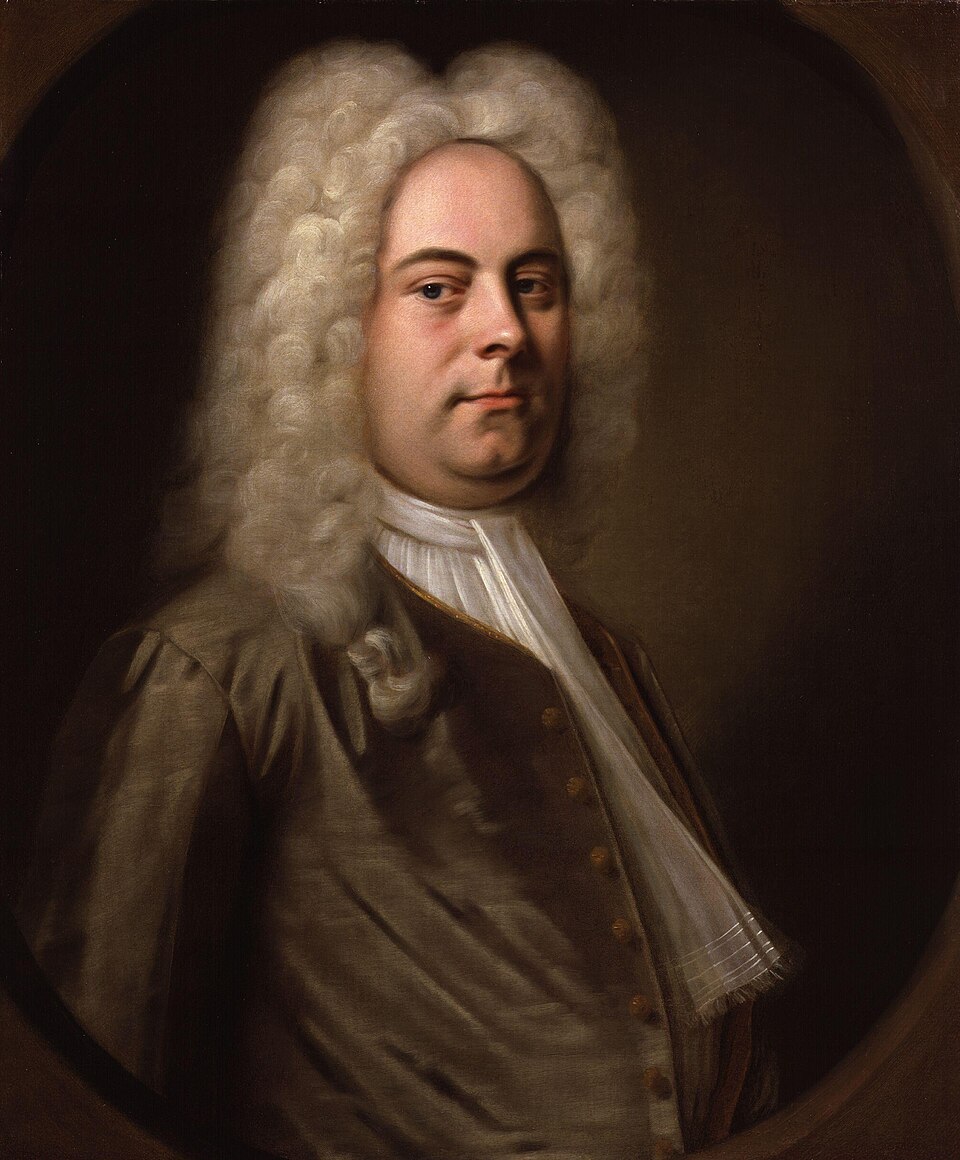
Georg Friedrich Handel · Baroque
1685 – 1759
1742 · Oratory · Dublin
Tonality
Without a unique tone. Like all oratoriums, he goes through a lot of tonalities. The choir «Hallelujah» and «Amen» end are in major.
Instruments
- 2 oboes
- Fagot
- 2 trumpets and timbals
- Rope (violins, violes, cello)
- Continuous bass (organ and key)
From the atril
Handel composed The Messiah in about three weeks, in the summer of 1741, about biblical texts gathered by Charles Jennens. It premiered in Dublin in April 1742 at a charity concert, and although its reception in London was at first warm, it ended up becoming the most interpreted coral work in history. His three parts go through prophecy and birth, passion and redemption.
I can INTEREST you.

For chorus and soloists it is an almost inevitable work, and therefore it risks being played on a routine basis. Made with small orchestra and agile choir, it recovers its freshness: the chorus as «For us a child is born» They dance, and the leaks breathe. The soloists have very honest arias, like «He was despised»and «Hallelujah»with his homophonic writing and trumpets, he still has an intact force. The «Amen» The end is a monumental escape.
What to hear
- The choir «For us a child is born».
- The aria de contralto «He was despised».
- The «Hallelujah» and the escape of «Amen» end.
Listen
The Mesias of Händel- complete work - subtitled · white duck
When you press the YouTube player will be loaded.

