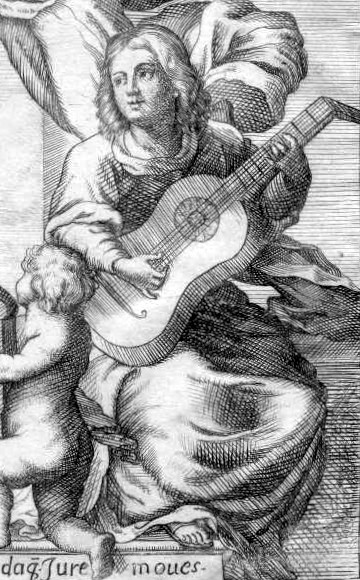
Gaspar Sanz · Baroque
1640 – 1710
h. 1674 · Baroque Guitar · Zaragoza
Tonality
Without a unique tone. They are several pieces written in numbers for Baroque guitar, and each has his own.
Instruments
- Five-order Baroque Guitar
From the atril
Pavana and jácara are two opposite faces of the Spain of the Golden Century. The pavana is a severe and ceremonious dance, of slow passage; the jácara, on the other hand, came from the world of rogues and rogues, and was sung in the intermonths with a living and challenging rhythm. Sanz writes about both with the same mastery, and together they show the expressive fan of the baroque guitar.
In the pavana, the guitarist has to find the nobility of the slow step, with well placed chords and a line that goes forward without haste. The jácara asks just the opposite: rhythmic energy, scratched with bite and a point of discarding. Playing them behind each other is a very grateful contrast exercise in concert, and also a small lesson in social history in music.
What to hear
- The serious and ceremonial passage of the pavana.
- The challenging rhythm of the jácara.
- The contrast between the court and the street.

